Fire Resistant Paint: Protecting Structures When Every Minute Matters
Fire safety is one of the most critical aspects of modern construction. While fire alarms and suppression systems play an important role, protecting the structural integrity of a building during a fire is equally essential. This is where Fire Resistant Paint, also known as Intumescent Coating, becomes a valuable solution.
What is Fire Resistant Paint?
Fire Resistant Paint is a specialized coating designed to protect steel and structural components from the damaging effects of fire. When exposed to high temperatures, the coating expands and forms a thick insulating layer, slowing down heat transfer to the underlying material.
This protective barrier helps maintain the strength and stability of structures, providing valuable time for evacuation and emergency response.
How Does It Work?
Under normal conditions, the coating appears like standard paint. However, during a fire:
- Heat activates the intumescent coating.
- The coating expands significantly in thickness.
- A protective char layer is formed.
- The char insulates the steel surface from extreme temperatures.
By delaying the rise in steel temperature, the coating helps prevent structural failure.
Key Benefits of Fire Resistant Paint
Excellent Fire Resistance
Helps delay the spread of fire and reduces heat transfer to structural elements.
Protects Steel Structures
Provides thermal insulation to steel beams, columns, and frameworks, helping maintain structural integrity.
Enhanced Safety
Improves the fire resistance rating of buildings and infrastructure, allowing more time for safe evacuation.
Long-Lasting Performance
Offers durable protection with strong adhesion and reliable performance over time.
Low VOC & Eco-Friendly
Formulated to be safer for both applicators and the environment.
Easy Application
Can be applied using spray, brush, or roller, making installation efficient across various project types.
Applications
Fire Resistant Paint is widely used in:
- Commercial Buildings
- Industrial Facilities
- Hospitals
- Educational Institutions
- Airports
- Metro Stations
- Bridges
- Infrastructure Projects
- Warehouses
- Manufacturing Plants
Why Fire Resistant Paint Matters
Steel is strong, but under extreme heat it can rapidly lose its load-bearing capacity. Without proper protection, structural failure can occur much sooner during a fire. Fire Resistant Paint provides a critical layer of defense that helps extend fire endurance, protect assets, and most importantly, save lives.
Sehgal Doors Fire Resistant Paint
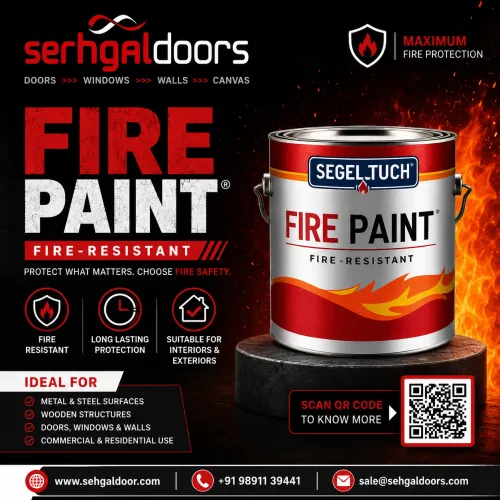
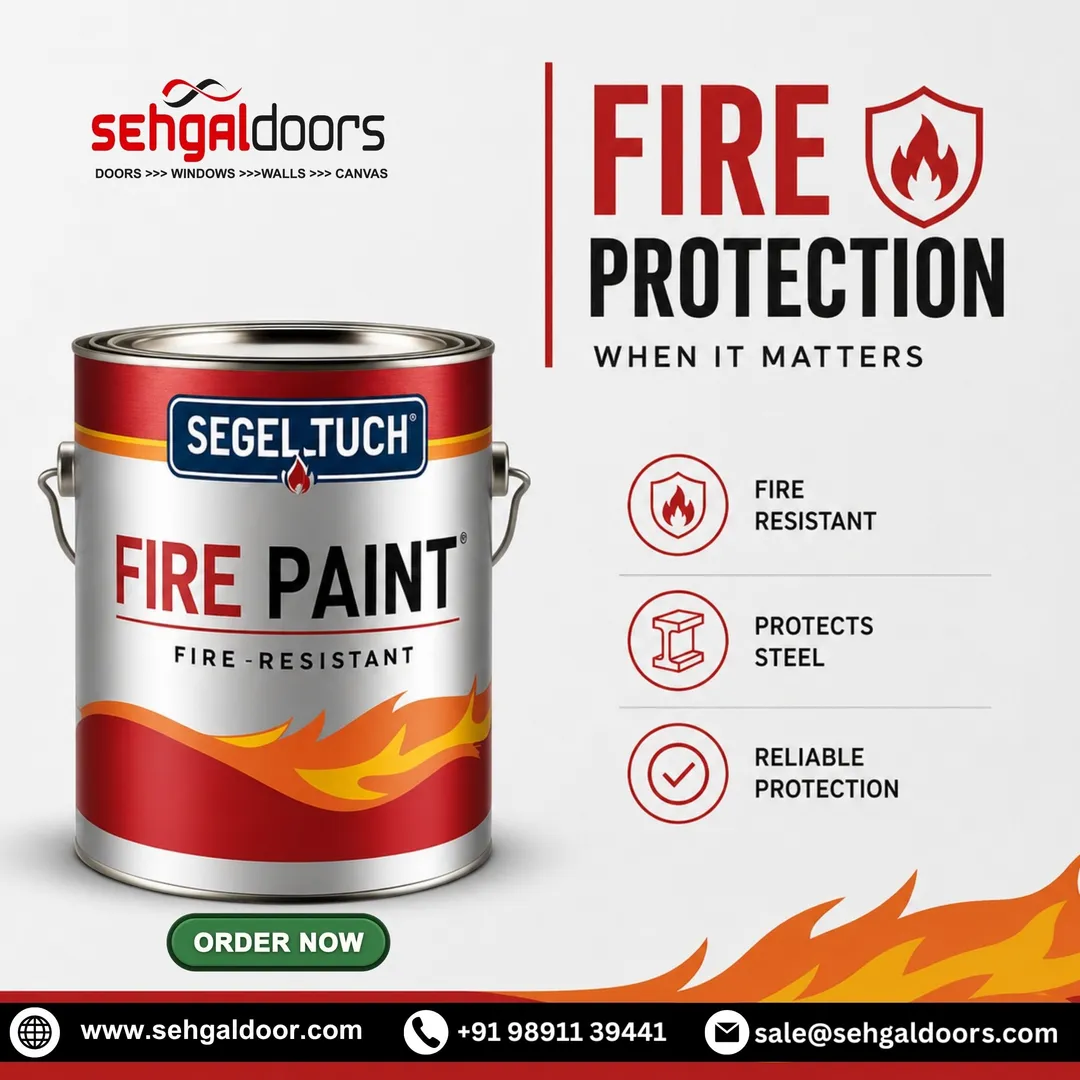
Sehgal Doors Fire Resistant Paint is an advanced intumescent coating designed to provide superior fire protection for steel structures. Offering up to 120 minutes of fire protection, it helps enhance building safety while preserving structural stability during fire emergencies.
Conclusion
Fire protection is not just about compliance—it is about safeguarding people, property, and investments. By incorporating high-performance Fire Resistant Paint into construction projects, organizations can significantly improve fire safety and resilience. Whether for commercial, industrial, or public infrastructure projects, intumescent coatings provide a smart and reliable solution for long-term fire protection.
Sehgal Doors – Protect What Matters.
Keywords